In order to release past impressions from our minds which negatively influence our behaviour, is it enough to simply witness them in meditation, or is it necessary to re-experience the pain and emotion that go along with them?
Past experiences in yogic terminology are known as samskara and, if you are aware of them you can get rid of them by simply witnessing them. If some samskaras come up to the level of the conscious mind during meditation and you re-live the pain and emotion, it is possible to get rid of it completely. The problem lies in knowing what our samskaras are, because generally we believe that our desires, ambitions, likes and dislikes are samskaras when actually they are not. They are patterns or modifications of mind- vrittis.
Samskaras go much deeper than that. They belong to the realm of the unconscious mind and construct the human personality. Without samskaras we would not be classified as human beings. If we try to understand personality in general, we will find that even animals have personalities. They have samskaras which go beyond the instinctive aspect of animal consciousness. Even trees and plants have samskaras, but that goes beyond the state of consciousness in which they live and survive.
The literal meaning of samskara is 'uniform personality', 'akara' meaning 'form', 'shape' or 'personality', and 'sam' meaning 'the totality of'. We relate intellectually to everything we perceive in the world as a form or object. That is the external experience, but when we talk about the aspect of consciousness, energy and personality in each object or being, we are talking about the samskara. So, even this tape recorder has a samskara, although it is a mechanical object. It can be classified as an object having a samskara, identity or uniform consciousness. Matter contains energy, energy has movement and within that movement there is some underlying awareness which maintains it in its gravitational field. That is actually what we call samskara.
When we say, 'Oh, I have this samskara in me' meaning 'I like this or that' or 'I want to achieve this but can't due to my samskara', that is only a modification of mind. Samskara are related to karma also. Consciousness was there before you were given birth and it will be there after you die. This consciousness has been given certain impressions which we can call experiences of the deeper self. We become aware of these impressions when we practise deep meditation, not superficial meditation. When we transcend the conscious, subconscious and unconscious experiences of personality it is possible that initially we become aware of certain traumas that have taken place in our early childhood, and of which we did not have any conscious recollection. I will give you an example.
One lady came here some time ago who used to suffer tremendous headaches since very early childhood for no apparent reason. No amount of medication or meditation had helped her. Then one day as she was meditating she had this splitting headache and suddenly she had a vision of herself as a miner in a coal mine in Wales, United Kingdom. The whole mine collapsed on her head and she died. Since re-experiencing that event she did not have a single attack of headache.
Now, this can be classified as a samskara, an impression which the consciousness has carried through several or more lives and the physical manifestation took the form of a headache. We can infer from this that her consciousness had undergone the experience in some previous life, but because of its traumatic effect on her personality, it remained within the folds of consciousness. Then, when that consciousness re-manifested in another body, the same trauma was again expressed by it. So, a human being is not a totally different entity than its experiences in its previous lives.
We can also term many other experiences which we may have had in childhood and about which we have entirely forgotten, as samskaras which have left a very deep impression on our personality. Children whose parents are drug-addicts or who have been divorced very early on have a different mentality because of this samskara.
Samskara has nothing to do with our intellect or buddhi. If we could rationalize our experience and try to clear the mind of it we would not give birth to that samskara again. Clearing the mind is important. If something comes up and you remember it or see it in the form of a vision, that is clearing the samskara. For example you may realize 'I know I have a lot of emotional problems. Previously I was not like this. I know the cause. I had a fight with my wife and we got divorced. Intellectually we cleared things up but emotionally we were not able to clear that experience from our mind'. So this emotional frustration later takes on the form of a samskara and transforms our personality.
If you know the cause of your present malady then you should also try to make sure that your mind is clear in all respects, not only intellectually but also emotionally and psychically. A spiritual aspirant must have this kind of awareness. We should not look at things only from the intellectual standpoint but from the aspect of the total personality. This is what meditation actually teaches.
Although we do begin the meditational practices with technique of self-observation, of observing our thoughts and what we are feeling, these techniques are not limited to this superficial awareness of personality. They go much deeper than that and whenever we meditate we should try lo keep the idea or concept in mind, that it deals with the total personality and the purification of an event which has already taken place.
How can we remove negative tendencies such as fear?

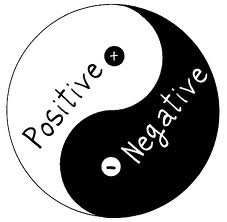
According to yogic, Eastern and Western psychology, negative tendencies are a part of our individual personality which must express itself whether we like it or not. So negative states of mind cannot be eradicated completely. The modern psychologist has defined fear in many different ways and there are many different types of tear. Children are afraid of the dark; some people are afraid to travel by aeroplane although it is the safest way of travelling in the world, because they think it can fall down from the sky or be hijacked.
Fear can be caused by insecurity also, or by certain dislike, or our inability to cope with life's difficult situations You may have a boss of whom you are afraid. As soon as you hear that he is calling you, you begin to sweat, your heart begins to palpitate, your blood pressure goes up and you begin to tremble without any real reason. So many types of fear we have to face, but it is possible to develop the state of mind of observing our mental reactions and physiological reactions, and controlling the symptoms. By controlling the symptoms, eventually the tendency can also be controlled. This is where pratyahara comes in.
First of all we must develop the attitude of witnessing everything taking place within us and around us. After we have been able to develop this attitude of witness, observer or 'seer', we can observe how a mental tendency influences our actions, behaviour, and our emotional and intellectual patterns. Then we try to find a rational way of dealing with this disturbance in our personality.
There is one practice called antar mouna which involves observing the thoughts, the emotions, creating them, removing them, developing attention, developing awareness - and this is one of the most effective means of combating any type of destructive disturbance in our personality. And this applies to fear, haired, jealousy, anger, frustration, depression or any negative state of mind.
by Swami Niranjanananda Saraswati